WTS Indonesia is a professional service firm focusing on the provision of Indonesian tax services. Equipped with decades of experience in dealing with complex Indonesian tax ecosystem, Tomy Harsono founded WTS Indonesia in 2019 where the firm started aiming to excel in the market from that point on
WTS Global News
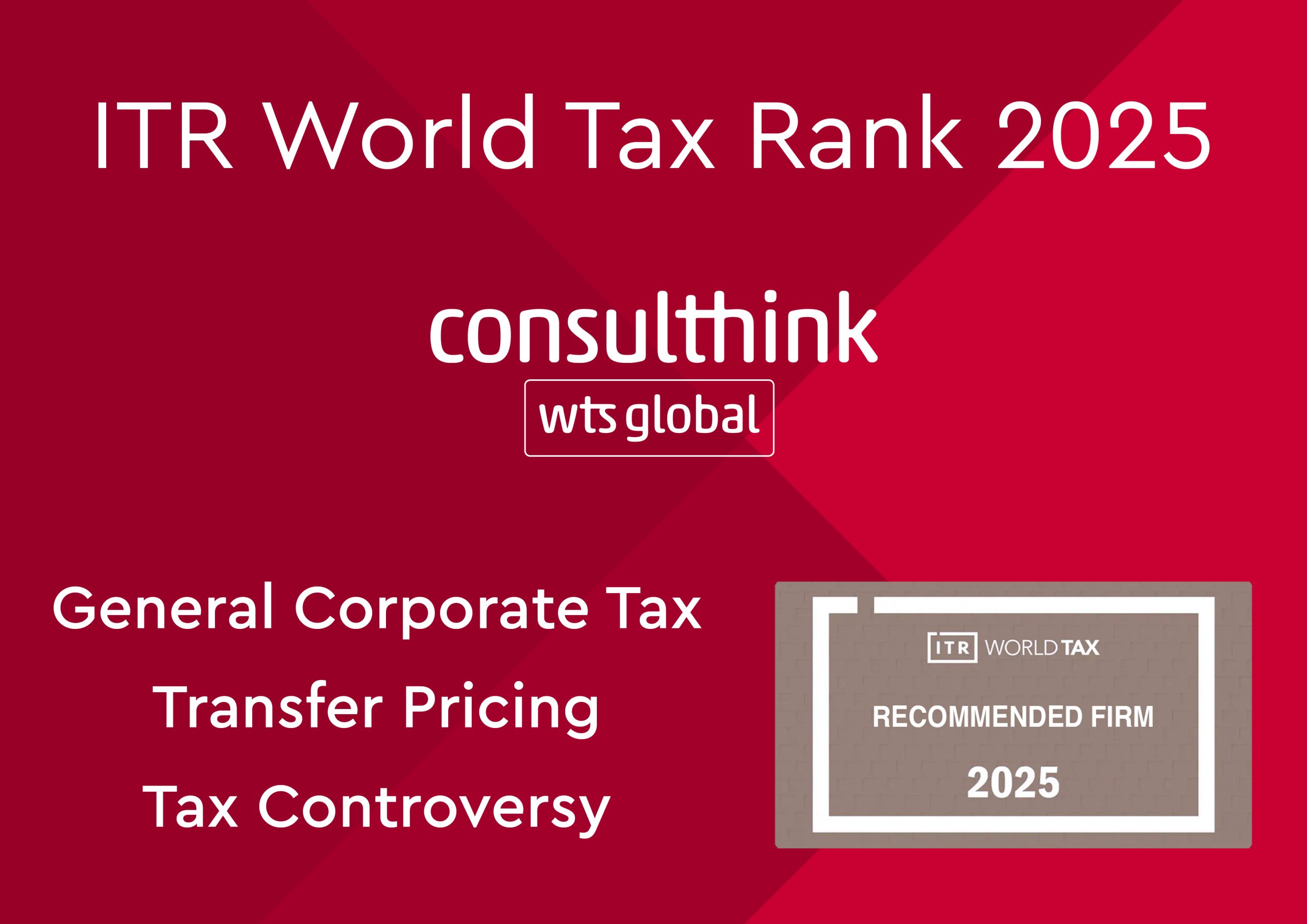
ITR World Tax Rank 2025
ITR World Tax Rank 2025 Update
We are excited to share that WTS Indonesia has made significant strides in the ITR World Tax Rank 2025, further solidifying our position as a leading tax advisory firm:
- General Corporate Tax: We are pleased to announce our promotion to Tier 3, a substantial improvement from our previous status as an “Other Notable Firm.” This elevation underscores our relentless pursuit of excellence and our ability to deliver high-quality corporate tax services that align with the needs of our clients and the expectations of the industry.
- Transfer Pricing: Our consistent performance and expertise in transfer pricing have allowed us to retain our Tier 3 position. This achievement reflects our deep understanding of transfer pricing complexities and our commitment to providing reliable, top-tier advisory services that help our clients navigate intricate pricing regulations and compliance requirements.
- Tax Controversy: We are proud to be newly recognized as an “Other Notable Firm” in the tax controversy category. This new recognition marks a significant milestone for WTS Indonesia, highlighting our growing proficiency and influence in managing and resolving complex tax disputes. Our approach to tax controversy is rooted in a thorough understanding of Indonesian and international tax laws, ensuring that we offer the best possible outcomes for our clients.
These recognitions are a testament to our unwavering dedication to maintaining the highest standards of service and our continuous efforts to expand our influence and expertise in the global tax consultancy landscape.
About WTS Indonesia: Founded in 2019 by Tomy Harsono, WTS Indonesia is a leading Indonesian professional services firm specializing in tax advisory. With a team of experienced professionals, we offer comprehensive tax services designed to navigate the complexities of Indonesia’s tax system effectively. As a member of WTS Global, WTS Indonesia is part of an extensive network of tax practices that spans over 100 countries, providing our clients with both local expertise and global reach. This affiliation allows us to deliver tailored tax solutions that meet the diverse needs of businesses operating in a globalized economy.
At WTS Indonesia, we are committed to staying at the forefront of the tax industry, continuously enhancing our capabilities and expanding our service offerings to better serve our clients. For more information, visit wtsindonesia.com.
Your Contacts
Tomy Harsono
Partner (Consulthink)
T +62 811 9196 939
Tomy.harsono@wtsindonesia.com


info@wtsindonesia.com
www.wtsindonesia.com
 WTSIndonesia
+62 21 506 789 68

Southeast Asia Tax Update Seminar: Indonesia, Malaysia, Philippines, Singapore, Thailand and Vietnam (In-person and Zoom)
Southeast Asia Tax Update Seminar: Indonesia, Malaysia, Philippines, Singapore, Thailand and Vietnam
(In-person and Zoom)
(In-person and Zoom)
9:00 am – 12:30 pm (Singapore time) | Wednesday, 14 August 2024
WTS Taxise, 61 Robinson Road #17-01A Singapore 068893
Amid changing geopolitics in Asia and subsequent questions over future investments, Southeast Asia is emerging as the driver of regional growth, underpinned by robust inter-region trade growth, increasing consumption, and substantial infrastructure investments.
This development underscores the fundamental need for business executives and decision-makers in Southeast Asia to stay informed about important market dynamics, including evolving tax reforms, compliance, and related regulatory trends.
Understanding these changing complexities empowers executives to make informed investment decisions and to capture emerging opportunities for their businesses.
Taxise Asia (WTS Taxise), Singapore member firm of WTS Global, is pleased to invite you to its upcoming client event covering the latest tax developments in Southeast Asia (Indonesia, Malaysia, Philippines, Singapore, Thailand and Vietnam).
Our tax experts in the region will discuss:
• Overview of trends and developments
• Country tax updates: Indonesia, Malaysia, Philippines, Singapore, Thailand and Vietnam
• Discussion of practical tips for Southeast Asia businesses, illustrated through case studies
• 2024: TP updates and top-of-mind TP challenges for Tax Executives
The seminar will feature tax experts from the WTS Global in Asia Pacific network. The events are highly relevant to C-suite executives and Finance and Tax professionals with interests or responsibilities in Asia and globally.
For a tailored and confidential discussion on the impacts of tax developments for your business and other relevant issues, WTS Global in Asia Pacific is opening timeslots for one-to-one sessions with our Asia Pacific tax experts. You may book a timeslot by clicking here or the registration button below.
We look forward to hosting you.
Register for the event.
14 Aug, 9 am – 12.30 pm
*Should you wish to join remotely, please indicate in the registration form.
Speakers:
Eugene Lim
Founding Principal
WTS Taxise, Singapore
Tomy Harsono
Partner
Consulthink, Indonesia
Till Morstadt
Managing Partner
Lorenz & Partners, Thailand
Christine Schwarzl
Associate Principal
WTS Taxise, Singapore
Fulvio Dawilan
Managing Partner
BDB Law, Philippines
Alexandre Ho Thanh
Head of Advisory Services
WTS Vietnam, Vietnam
Benedict Teow
Associate
WTS Taxise, Singapore
Thenesh Kannaa
Executive Director
TRATAX, Malaysia
Lan Pham
Head of Legal & Tax
WTS Vietnam, Vietnam

Update on Transfer Pricing Regulations Across Asia Pacific for 2024
Update on Transfer Pricing Regulations Across Asia Pacific for 2024
As of March 2024, significant updates have been made regarding transfer pricing (TP) regulations in several Asia Pacific countries. The latest Indonesian Transfer Pricing (TP) guidelines are updated under MoF 172/2023, also known as the Indonesia TP Omnibus Law. This regulation unifies and clarifies provisions from previous laws, ensuring better compliance and understanding for businesses engaged in international transactions.
Legal Basis and Documentation Requirements:
- Regulation: The TP guidelines are under MoF 172/2023, effective since 2010, adopting OECD standards.
- Member Status: Indonesia is part of the OECD/G20 Inclusive Framework on BEPS.
- Acceptance: TP policies aligned with OECD guidelines are accepted by Indonesian tax authorities.
Master File (MF) and Local File (LF) Requirements:
- Thresholds:
- Gross revenue above IDR 50 billion.
- Tangible goods transactions above IDR 20 billion.
- Intangible goods transactions above IDR 5 billion.
- Any transaction with parties in lower tax jurisdictions than Indonesia.
- Language: Documentation must be prepared in Bahasa Indonesia, with no allowance for English.
- Availability: Must be available within 4 months of the fiscal year’s end and submitted within 1 month upon request during tax audits.
Country-by-Country Reporting (CbCR):
- Submission: Required electronically through the taxpayer’s portal, aligned with the fiscal year corporate tax return.
- Penalties: Non-compliance can result in penalties of IDR 1 million, and further penalties if CbCR is not submitted upon a reprimand from the tax authorities.
Access the guides here:


Should you have any questions or need further assistance, feel free to contact our regional experts.
This update is based on the latest available data as of March 2024. For continuous updates, please visit WTS Global Insights .
Your Contacts
Christine Schwarzl
Associate Principal (Taxise Asia)
WTS Asia Pacific Transfer Pricing Service Leader
T +65 6304 5390
christine.schwarzl@TaxiseAsia.com
Tomy Harsono
Partner (Consulthink)
T +62 811 9196 939
Tomy.harsono@wtsindonesia.com

info@TaxiseAsia.com
www.TaxiseAsia.com
Taxise Asia LLC
+65 63047972
info@wtsindonesia.com
www.wtsindonesia.com
WTSIndonesia
+62 21 506 789 68

Comparative analysis of Indonesia’s new Transfer Pricing guidelines against Singapore’s Transfer Pricing guidelines
Comparative analysis of Indonesia’s new Transfer Pricing guidelines against Singapore’s Transfer Pricing guidelines
Indonesia’s new transfer pricing (“TP”) guidelines are enshrined in the Minister of Finance Regulation 172/2023 (“MoFR-172”), which was announced on the 29th of December 2023. MoFR-172 revokes previous MoFR guidance (MoFR-22, MoFR-49 and MoFR-213), all of which have been streamlined and restated in MoFR-172. There are changes to how the TP process, the Mutual Agreement Procedure (“MAP”) and the Advance Pricing Arrangements (“APA”) are implemented in Indonesia, with the aim of enhancing clarity and fairness in business transactions.
This alert reviews the updated, consolidated TP guidelines for Indonesia and compares the guidelines to the Singapore TP guidelines – with reference to the IRAS TP Guidelines (Sixth Edition). The definition of related parties, application of the arm’s length principle, TP documentation requirements, compliance assessments, corresponding adjustments, mutual agreement procedures (“MAPs”) and Advance Pricing Agreements (“APAs”) in the guidelines, will be compared.
Indonesia’s new transfer pricing (“TP”) guidelines are enshrined in the Minister of Finance Regulation 172/2023 (“MoFR-172”), which was announced on the 29th of December 2023. MoFR-172 revokes previous MoFR guidance (MoFR-22, MoFR-49 and MoFR-213), all of which have been streamlined and restated in MoFR-172. There are changes to how the TP process, the Mutual Agreement Procedure (“MAP”) and the Advance Pricing Arrangements (“APA”) are implemented in Indonesia, with the aim of enhancing clarity and fairness in business transactions.
This alert reviews the updated, consolidated TP guidelines for Indonesia and compares the guidelines to the Singapore TP guidelines – with reference to the IRAS TP Guidelines (Sixth Edition). The definition of related parties, application of the arm’s length principle, TP documentation requirements, compliance assessments, corresponding adjustments, mutual agreement procedures (“MAPs”) and Advance Pricing Agreements (“APAs”) in the guidelines, will be compared.
Indonesia’s new TP guidelines (MoFR-172)
In MoFR-172, the MOF provides a single, consolidated source of guidance for TP matters, including related party definition, application of the arm’s length principle, TP documentation obligations, compliance assessment, corresponding adjustments, MAPs and APAs. In doing so, the regulation repeals several previous regulations and aligns with the Harmonisation of Tax Regulations Law in Indonesia.
Definition of Related Parties
The MoFR-172 guidance clarifies that a special or related party relationship exists where ownership, control and family relations between parties and individuals results specifically in control of one or more parties over the other, or where one or more parties is not independent.
Further, control is deemed to exist through:
- direct or indirect control of a party by another, or common control of two or more parties;
- control of a party through management or use of technology, or through direct or indirect participation in management or operational decision-making by an individual;
- commercial or financial knowledge or business group affiliation by parties; or
- self-declaration of a special relationship by a party or parties.
With the clarifications, taxpayers are cautioned to apply rigour in assessing whether special relationships exist, as well as properly documenting the outcomes for defence purposes.
By comparison, under the Singapore TP guidelines, related parties are more narrowly defined as where a person directly or indirectly controls another person, or both persons are directly or indirectly controlled by another person. As a result of the different definitions, a potential risk may arise where Indonesia claims that a special relationship exists, based on control through technology use, business affiliation or self-declaration.
Arm’s Length Principle
Under MoFR-172, the MOF introduces new related party transaction (“RPT”) disclosure requirements, including:
- Increased scope and depth of ex-ante RPT analyses for service, now all financial, asset transfer, business restructuring and cost contribution transactions – including increased guidance on the proof of arm’s length pricing for these transactions. Proof includes valuation of licensed intangible property and proof that services are provided, benefit the recipient and services are not shareholder services;
- Selection of the most appropriate TP method for arm’s length analysis, including the bias for Comparable Uncontrolled Price (”CUP”) or Comparable Uncontrolled Transaction (“CUT”) methods and application of the Profit Split Method for unique and valuable contribution transactions; and
- Determination of the arm’s length principle (“ALP”), whether a point or range, based on a single year or multiple year comparable data (the latter only if comparability is increased), and the preference for comparables from the jurisdiction of the tested party.
With the updated requirements as outlined, compliance is more complex, there is an increased burden of proof for taxpayers, and increased compliance costs, through:
- Indonesia requiring both ex-ante and ex-post analyses on an increased transaction scope;
- a requirement to justify the basis for selection of an arm’s length range (over a point), without guidance on how to meet the burden of proof;
- a requirement to pass transaction existence and benefit tests, before the ALP application;
- clarification of use of the three additional TP methods, (including valuations), without clear guidance on application of the methods, first introduced in MoF 22/2020; and
- the limited TP documentation preparation period for taxpayers at year end, when their focus is finalising financial audits for tax filing.
Singapore adopts a less complex, but more business-friendly TP compliance framework, that may ultimately be lower cost, based on:
- ex-post pricing analyses of RPTs;
- selection of the most appropriate TP method based on the five OECD TP methods (with guidance on their application);
- support for use of arm’s length ranges and accept taxpayer service analyses; and
- 10-11 months to prepare TP documentation,
TP Documentation
TP documentation requirements are largely unchanged under MoFR-172, although updates in the preparation, submission and penalties exist in respect of Country-by-Country Reports (“CbCR”) and TP Documentation.
For CbCRs, the regulation clarified that for domestic taxpayers, a CbCR is required if the taxpayer is a parent entity of a business group (based on ownership and not control), whose consolidated gross turnover is at least IDR 11T in the prior Fiscal Year (“FY”). The regulation includes the updated formula for calculation of gross turnover for CbCR scope determination.
Regarding TP documentation (Local and Master Files), the regulation clarified that taxpayers have one month to submit the documentation, on request. Failure to comply will attract penalties.
This update aligns the Indonesian CbCR requirements in with Singapore legislation, which applies to Singapore tax residents who are Ultimate Parent Companies of a Singapore MNE Group and who have consolidated group revenues of S$1,125M in the prior FY. Further, taxpayers in Singapore are required to submit their TP documentation to IRAS within 30 days upon request.
Compliance Assessment
MoFR-172 confirms that the mechanism to verify compliance with the ALP is the assessment of related party disclosures and TP documentation for their fulfilment, application of the ALP and timely preparation. Non-compliance with the ALP will result in an adjustment to the arm’s length price by the Directorate General of Taxes (“DGT”).
An adjustment, whether for domestic or cross-border related party transactions, will be deemed a dividend, subject to tax – unless the taxpayer either makes a self-adjustment prior to a DGT assessment or agrees with the DGT adjustment. Taxpayers can apply tax treaty relief.
Further, if the adjustment results in a higher selling price of goods or services, the DGT can adjust the VAT tax base and apply the TP adjustments to each goods or service transaction – although such adjustments will not include credits to the input VAT of buyers.
We anticipate that the increased range of adjustments announced, will likely increase the compliance burden for taxpayers in Indonesia.
In Singapore, IRAS may similarly conduct transfer pricing audits of TP and supporting documentation to assess taxpayer compliance with the ALP – and to adjust the transaction pricing, where not at arm’s length. IRAS may impose surcharges and penalties for non-compliance with TP requirements, including timely preparation and/or submission of TP documentation, arm’s length pricing or providing misleading information. A difference is that Singapore requires GST adjustments up or down, where the price changes are accounted for in taxpayer financial statements, or the TP adjustment is taxable or allowable for income tax purposes.
Secondary Adjustments
DGT’s adjustment on TP, being a primary adjustment in the calculation of taxable income, may lead to a secondary adjustment in the form of “constructive dividend”.
A constructive dividend on cross-border RPT is subject to withholding tax assessment at 20% or a reduced rate as per the DTA. However, a constructive dividend from domestic RPT is generally exempt from withholding tax.
The DGT shall forgo such secondary adjustment if: (i) there is repayment of cash or cash equivalent at the amount of TP-induced adjustment or (ii) taxpayer agree with TP adjustment.
Corresponding Adjustments
The MoFR 172 regulations clarified that for TP adjustments imposed by the DGT or counterparty Treaty Partner’s tax authority that result in double taxation:
- Where imposed on a foreign tax party in cross-border transactions, the local counterparty may carry out a corresponding adjustment. Corresponding adjustment is carried out through MAP; and
- Where imposed between domestic taxpayers, a corresponding adjustment may be requested, if the adjusted party agrees with the TP adjustment and does not file any legal action.
In Singapore, when a TP adjustment by a foreign tax authority results in double taxation for a Singapore taxpayer, the taxpayer may seek relief through a corresponding adjustment. The IRAS will only consider making corresponding adjustments where an Avoidance of Double Tax Agreement (“DTA”) exists between Singapore and the counterparty jurisdiction, and the Singapore taxpayer has applied for a MAP under the DTA.
MAP
The MoFR 172 regulations provide further detail of the administrative procedures for MAPs, introduced in PMK-49 (issued in 2019). The regulation provides for lawsuit and Judicial Reviews to be simultaneously carried out with a MAP process (the latter being terminated in the event of a lawsuit or JR decision and the appeal/JR decision adopted).
In other updates, refunds of tax overpayment are not postponed by MAP requests; the DGT will issue notifications of MAP agreements, the DGT will stop MAP proceedings where taxpayers fail to submit requested documents; and importantly, if a remedy under a MAP proceeding is issued after the domestic remedy is decided, the tax payable under the MAP must be recalculated according to the domestic remedy decision.
In Singapore, taxpayers may initiate a MAP within the DTA-specified time limit, following a well-documented process (including a pre-filing meeting, MAP application submission and provision of data to enable IRAS to liaise with the foreign competent authority to resolve the dispute. Taxpayers can request MAP assistance or domestic judicial remedies, or both. Where an issue has been decided via judicial remedies, while a taxpayer can request MAP assistance, IRAS is unlikely to make adjustments that will be at odds with judicial remedies.
APA
The MoFR 172 regulations provide further detail of the administrative procedures for APAs, introduced in PMK-22 (issued in 2020). Under the regulations, the administrative conditions for eligibility for an APA application were further restricted, and taxpayers in the preliminary evidence examination stage of a tax crime investigation, taxation criminal proceedings or serving a criminal sentence are prohibited from APA requests. Where a taxpayer submits an APA request but becomes involved in legal processes during the negotiation phase, the DGT is authorised to halt the APA process.
Other changes include clarifying that multilateral APAs are possible, streamlining APA processes for taxpayers seeking international agreements, allowing unilateral APAs to be requested after withdrawal from bilateral or multilateral proceedings, extending the APA renewal request period, and exempting penalties applicable to rollback period while negotiating an APA.
The new conditions further restrict the eligibility of taxpayers to apply for APAs, but may attract taxpayers based on new features such as streamlined processes. Certain features of the APA program that impact its effectiveness (for example, if the outcome of a Bilateral APA is to reduce the taxable revenues of a subsidiary of a foreign MNE, then the APA will not be allowed).
In Singapore, taxpayers may initiate unilateral, bilateral, or multilateral APAs, following a well-documented APA program, with considerable guidance available. Eligible taxpayers. The IRAS provides indicative timeframes for each step and taxpayers will be advised if their APA request will be accepted, within 6 months of requesting the APA.
Concluding Thoughts
The introduction of MoFR-172 has provided clarity in related party definitions and arm’s length price determination, and MAP and APA programs.
However, the confirmation of the three additional TP methods (CUT, Asset valuation and Business Valuation), without application guidance; the increased scope of ex-Ante analyses to price RPT; and the additional requirements for taxpayers to justify their arm’s length range and services charges, serves to increasingly shift the burden of proof to taxpayers. These new conditions add complexity and potential uncertainty to the compliance process, increasing the cost of compliance.
The additional data points requested may provide additional areas for challenge and the top-of-mind question for taxpayers must be: how do I defend my TP position?
Your Contacts
Christine Schwarzl
Associate Principal (Taxise Asia)
WTS Asia Pacific Transfer Pricing Service Leader
T +65 6304 5390
christine.schwarzl@TaxiseAsia.com
Tomy Harsono
Partner (Consulthink)
T +62 811 9196 939
Tomy.harsono@wtsindonesia.com
info@TaxiseAsia.com
www.TaxiseAsia.com
Taxise Asia LLC
+65 63047972
info@wtsindonesia.com
www.wtsindonesia.com
WTSIndonesia
+62 21 506 789 68
Global Asia: Tax transformation and opportunities
Global Asia: Tax transformation and opportunities
Post-pandemic Asia has seen a proliferation of tax developments in response to economic and political change. Global and regional tax MNC tax executives ask WTS Global to support them in navigating this fast-changing landscape. Our latest Asia Pacific brochure provides insights, analysis, links to further information and contact details to help clients keep pace with what matters most.
To download a copy, click here
Some key themes associated with the post-pandemic recovery of economies and businesses covered in this publication:
- Pillar Two-GloBE roles implementation is at this point of time scattered in Asia. For companies operating in Asia, it is crucial to monitor the legislative process and to be aware of this “incomplete puzzle”
- US-China trade tensions continue to shape global value chains and global investment flows continue as strategic derisking considerations weigh heavily on all businesses.
- Tax reliefs and subsidies for businesses have been part of a number of governments’ recovery plan in the region to help spur economic activities.
- This is complemented with stricter tax audits and tax compliance requirements. There have been a number of noteworthy jurisdiction-specific changes, such as the introduction in UAE of corporate tax and transfer pricing, the relocation of the Indonesia capital city and anticipated policy changes for China’s mega-metropolitans
Your Contacts
Tomy Harsono
+62 811 9196 939
tomy.harsono@wtsindonesia.com
Andy Irawan
+62 895-0612-2020
andy.irawan@wtsindonesia.com
info@wtsindonesia.com
www.wtsindonesia.com
WTSIndonesia
+62 21 506 789 68

Simplification in Article 21 Payroll Tax Calculation Starting 2024
Simplification in Article 21 Payroll Tax Calculation
Starting 2024
The Directorate General of Taxes (DJP) acknowledges approximately 400 scenarios for WHT Art 21 calculations. This complexity leads to administrative burdens for both taxpayers and tax authorities. The government, in light of coretax system implementation, aims to simplify the calculation of Withholding Tax Article 21 using Average Effective Rate (TER) starting 2024.
Planned TER scheme:
1. For permanent employees, retirees, and civil servants/military/police personnel, Art.21 will be calculated using Monthly TER. For the month of December or latest working month, it is required to recalculate total gross income minus deductible, multiplied by normal income tax rates as per Article 17 of the Income Tax Law, deducted by previous months TER.
There are three TER categories based on marital status, as follow:
a. TER A: for individuals with marital status of single (S/0), single with 1 dependent (S/1), and married with 0 dependent (M/0).
b. TER B: for individuals with marital status of single with 2 dependents (S/2), married with 1 dependent (M/1), single with 3 dependents (S/3), and married with 2 dependents (M/2).
c. TER C: for individuals with marital status of married with 3 dependents (M/3).
2. For daily non-permanent employees WHT Art 21 will be calculated using Daily TER, applicable at the time of payment. Two types of rates will be applied, for gross income below IDR 450,000, an effective rate of 0%, and for gross income from IDR 450,000 to IDR 2.5 million, an effective rate of 0.5% will apply.
3. For non-employees, Art.21 income tax will be calculated using Non-Employee TER, with a tax base of 50% of gross income. There are 35 tariffs layers based on the amounts of gross income.
This publication is intended for general information only and should not be interpreted as substitute to any of our professional advices. All of information contained in this publication refers to the featured regulation as per the date of this publication.
Your Contacts
Tomy Harsono
+62 811 9196 939
tomy.harsono@wtsindonesia.com
Andy Irawan
+62 895-0612-2020
andy.irawan@wtsindonesia.com
info@wtsindonesia.com
www.wtsindonesia.com
WTSIndonesia
+62 21 506 789 68